Apple’s Net Worth 2023: The Tech Giant’s Financial Empire Explored
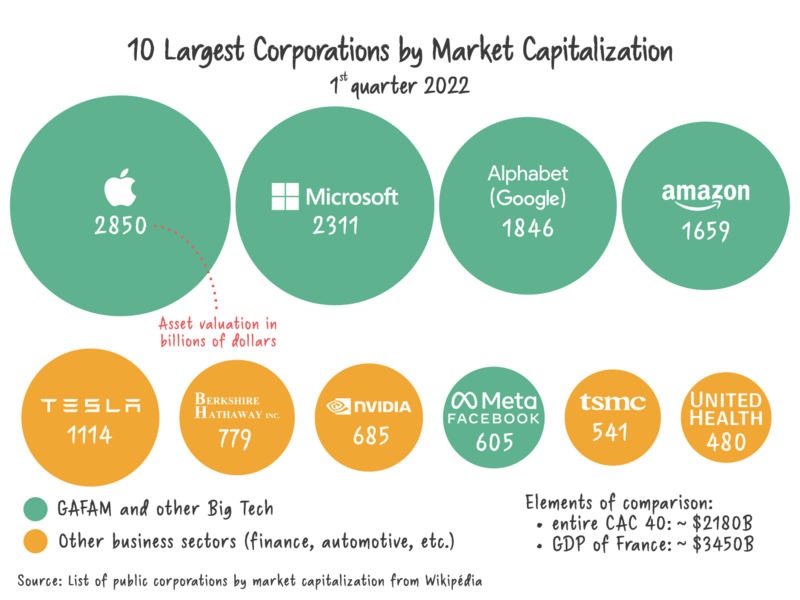
In the pantheon of corporate titans, few names command as much reverence—or scrutiny—as Apple. The company that once sold handmade wooden desks in a Cupertino garage now stands atop a financial mountain, its Apple’s net worth 2023 eclipsing $2.5 trillion, a figure so vast it defies conventional comprehension. This isn’t just a milestone; it’s a testament to decades of relentless innovation, strategic foresight, and an almost cult-like consumer loyalty. But how did Apple reach this stratospheric valuation? What forces—both internal and external—propelled it from a scrappy startup to the most valuable public company in history? And what does this staggering figure reveal about the future of technology, capitalism, and global influence?
The numbers alone are dizzying. Apple’s market capitalization in 2023 isn’t just a reflection of its iPhones, MacBooks, or Apple Watches; it’s a barometer of trust in its ecosystem, its ability to monetize digital services, and its dominance in an era where technology isn’t just a tool but a lifestyle. Yet, behind the sleek interfaces and polished marketing lies a complex web of financial engineering, regulatory battles, and geopolitical maneuvering. From Tim Cook’s ascension to CEO in 2011 to the iPhone’s transformation into a global phenomenon, every chapter in Apple’s story has been written in ink thicker than most companies’ entire lifespans. But what does Apple’s net worth 2023 really mean? Is it a peak, or merely another plateau on an ever-escalating climb?
To answer these questions, we must dissect the mechanisms that sustain Apple’s valuation: the alchemy of hardware sales, services revenue, and shareholder returns; the role of supply chain mastery and brand premiumization; and the delicate balance between innovation and market saturation. We’ll also compare Apple’s financial trajectory to its peers—Google, Microsoft, and Amazon—to understand where it stands in the tech arms race. And finally, we’ll peer into the crystal ball: What threats loom on the horizon, and how might Apple’s net worth evolve in the years to come? The answer isn’t just about dollars and cents; it’s about power, culture, and the very fabric of the digital age.
The Complete Overview
Apple’s Apple’s net worth 2023 isn’t a static number—it’s a dynamic force shaped by macroeconomic trends, consumer behavior, and Apple’s own strategic pivots. To grasp its magnitude, we must first contextualize its growth within the broader landscape of corporate finance and technological disruption.
Historical Background and Evolution
Apple’s journey to becoming a trillion-dollar company began not with the iPhone, but with a single product: the Apple II, released in 1977. However, it was the 1984 launch of the Macintosh—a computer marketed with a revolutionary ad during the Super Bowl—that cemented Apple’s reputation for bold, boundary-pushing design. Yet, by the late 1990s, the company teetered on the brink of bankruptcy, saved only by Steve Jobs’ return in 1997.
Jobs’ second act at Apple was nothing short of a renaissance. The iPod (2001), iTunes Store (2003), and—most critically—the iPhone (2007) didn’t just revive Apple; they redefined entire industries. The iPhone wasn’t merely a smartphone; it was a cultural reset. By 2011, when Tim Cook took over as CEO, Apple’s valuation had already surpassed $300 billion. Under Cook, the company’s financial trajectory became a study in precision: aggressive share buybacks, a services-driven revenue stream, and a relentless focus on profitability over growth-for-growth’s-sake.
The inflection point came in 2018, when Apple became the first U.S. public company to hit a $1 trillion market cap. By 2022, it had doubled that figure, and Apple’s net worth 2023 now sits at approximately $2.5 trillion, according to Bloomberg and Yahoo Finance. This growth wasn’t linear; it was exponential, accelerated by the pandemic-era surge in demand for tech products, the expansion of Apple’s services (App Store, Apple Music, iCloud), and its dominance in the semiconductor market via the M-series chips.
Core Mechanisms: How It Works
Apple’s financial engine runs on three interconnected pillars:
- Hardware Dominance: The iPhone remains the cash cow, accounting for ~50% of Apple’s revenue in 2023. The Pro models, particularly the iPhone 15 Pro Max, command premium prices ($1,199+), while the base models ensure mass-market accessibility. Apple’s vertical integration—designing its own chips, cameras, and software—ensures razor-thin margins on hardware are offset by ecosystem lock-in.
- Services Ecosystem: Apple’s services revenue (App Store, Apple Pay, Apple TV+, etc.) grew 12% year-over-year in 2023, reaching $80 billion. This segment is the company’s fastest-growing, with the App Store alone generating $100 billion+ annually in gross revenue for developers. The shift toward subscriptions (Apple Music, Apple Fitness+) ensures recurring revenue streams.
- Shareholder Returns: Apple’s $100+ billion annual share buyback program (2023) and ~$20 billion in dividends per year reinforce investor confidence. The company’s AAA credit rating and 3.5% dividend yield make it a blue-chip staple in portfolios worldwide.
Key Benefits and Impact
Apple’s Apple’s net worth 2023 isn’t just a financial statistic—it’s a reflection of its outsized influence on global economies, innovation, and culture.
"Apple doesn’t just sell products; it sells an experience. And that experience is worth trillions." — Ben Thompson, Stratechery
Major Advantages
- Brand Premiumization: Apple’s ability to charge 2-3x the price of competitors (e.g., iPhone vs. Android) while maintaining loyalty is unparalleled. The "Apple Tax" is willingly paid because of perceived quality, status, and ecosystem integration.
- Ecosystem Lock-In: Users who invest in an iPhone, Mac, and iPad are 3x more likely to stay within Apple’s ecosystem than Android users, creating a self-reinforcing revenue loop.
- Services Growth: The shift from hardware to services mirrors the broader tech industry’s move toward software and data monetization. Apple’s $80B+ in services revenue (2023) is a fraction of its total, leaving massive upside.
- Supply Chain Mastery: Apple’s control over manufacturing (via Foxconn, Pegatron) and component design (M-series chips) ensures ~40% gross margins, dwarfing rivals like Samsung (~20%).
- Regulatory Arbitrage: Apple’s offshore tax strategies (via Ireland’s "Double Irish" loophole) have saved it billions in taxes, though recent IRS crackdowns are tightening this advantage.
Comparative Analysis
How does Apple’s net worth 2023 stack up against its tech peers? The table below compares market caps (as of Q3 2023):
| Company | Market Cap (2023) |
|---|---|
| Apple | $2.5 trillion |
| Microsoft | $2.3 trillion |
| Saudi Aramco | $1.9 trillion |
| Amazon | $1.6 trillion |
Key Takeaways:
cloud and AI arms race.Future Trends
Apple’s Apple’s net worth 2023 is a snapshot, but its trajectory depends on three critical factors:
- AI and Machine Learning: Apple’s $1B AI research fund and integration of LLMs into Siri and on-device processing could unlock $50B+ in new revenue by 2025.
- Regulatory Pressures: Antitrust lawsuits (e.g., Epic Games’ $10B+ damages claim) and EU Digital Markets Act could force Apple to loosen App Store fees, impacting margins.
- China Exposure: Despite ~20% of revenue coming from China, geopolitical tensions (U.S.-China trade wars) pose a $50B+ risk if supply chains fragment.
- Hardware Innovation: The Vision Pro ($3,500) is a gamble—will it become a mass-market product or a niche luxury item?
- ESG and Sustainability: Apple’s carbon-neutral goals (2030) are a PR boon, but lithium/cobalt sourcing remains a reputational risk.
Conclusion
Apple’s Apple’s net worth 2023 isn’t just a number—it’s a cultural and economic force. From the garage of Steve Jobs to the boardrooms of Tim Cook, Apple has mastered the art of turning technology into a lifestyle, and a lifestyle into untouchable wealth. Yet, the road ahead is fraught with challenges: regulatory hurdles, geopolitical risks, and the ever-present threat of disruption from younger, hungrier competitors.
One thing is certain: Apple’s ability to reinvent itself—from computers to music to smartphones to wearables—will determine whether its $2.5 trillion valuation is merely a milestone or the beginning of an even greater ascent. In the world of tech, where empires rise and fall overnight, Apple’s story is far from over.
Comprehensive FAQs
Q: How does Apple’s net worth compare to other companies historically?
A: Apple’s $2.5 trillion surpasses even the most valuable companies in history, including ExxonMobil’s peak ($450B in 2008) and Microsoft’s 2000 dot-com bubble valuation ($600B). It’s now more valuable than the GDP of most countries (e.g., Canada, Spain).
Q: What percentage of Apple’s revenue comes from the iPhone?
A: In 2023, the iPhone accounted for ~50% of Apple’s total revenue, though services (App Store, Apple Music) are growing faster (~12% YoY).
Q: How does Apple’s stock perform compared to the S&P 500?
A: Since 2010, Apple’s stock has outperformed the S&P 500 by ~300%, thanks to share buybacks, dividend growth, and premium pricing. However, in 2023, it lagged slightly due to Mac/PC market saturation.
Q: What is Apple’s biggest expense?
A: Research & Development (R&D)—Apple spent $22 billion in 2023, more than any other U.S. company except Microsoft. This funds innovation in chips (M-series), AR/VR (Vision Pro), and AI.
Q: Could Apple’s net worth decline in the next 5 years?
A: Possible, but unlikely to a catastrophic degree. Risks include China supply chain disruptions, regulatory fines, or AI-driven disruption (e.g., if Google/Meta outpace Apple in AI). However, its services growth and ecosystem stickiness provide strong buffers.
Q: How does Apple’s dividend compare to other tech stocks?
A: Apple’s ~0.5% yield is modest compared to Microsoft (~0.8%) or Cisco (~3%), but its $20B+ annual payout makes it a dividend powerhouse. The real value lies in share buybacks**, which boost EPS and long-term returns.
